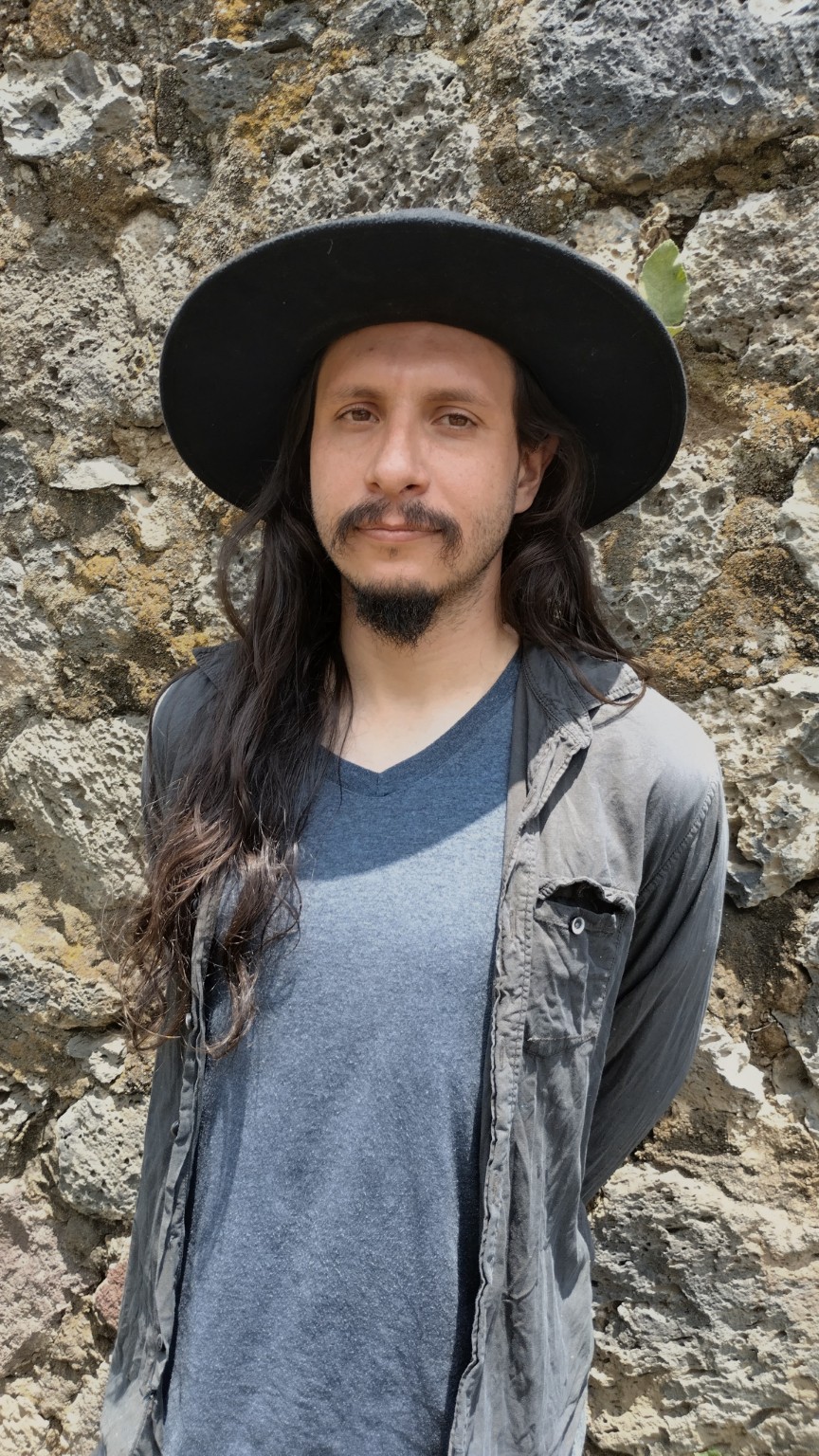
Portrait of Diego Madero against a stone wall

Working orientation

I understand my work as a practice of exploration, study, and construction. I am interested in how technical, material, social, sonic, and symbolic systems shape what people can perceive, coordinate, and sustain.

That is why the site is organized around domains of practice rather than a résumé-first narrative. The projects differ in medium, but they often share a concern with experience, orientation, infrastructure, and the design of conditions.

Trajectory and framework

Over the years I have worked as a musician, designer, educator, curator, entrepreneur, and independent developer. Part of the practice comes from experimental art and cultural work; another part comes from the concrete construction of tools, businesses, spatial systems, and everyday infrastructures.

I still use the word art where it is contextually accurate, but not as a universal container for everything here. Depending on the project, a more precise language may be practice, research and making, symbolic systems, perceptual design, or cultural and technical infrastructure.

For a concise framing of that approach, see the framework summary and pseudo-manifesto below.

Practice signature
Read framework summary Read pseudo-manifesto

Document archive

Curriculum / Resume

A compact dossier of CV variants tailored to different contexts and modes of practice.

Select dossier
Design & Technology English

CV — Design & Technology

Focused on software systems, interaction design, and technical direction.

Downloads are generated from the same markdown source used in the viewer. All formats available

Profile

Artist-designer and systems builder working between software, sonic practice, and material research. I design and implement tools, interfaces, and collaborative structures that connect cultural intuition with technical rigor.

Focus Areas

  • Interaction and system design for cultural and educational contexts.
  • Prototyping and shipping web tools with a strong editorial layer.
  • Cross-disciplinary research in music, archives, and symbolic systems.

Selected Roles

Independent Practice — 2018–Present

  • Developed bilingual digital platforms, portfolios, and publication systems.
  • Built maintainable front-end architectures in Astro and modern web stacks.
  • Directed visual and structural languages across multiple long-term projects.

Cultural and Educational Collaboration — 2013–Present

  • Designed workshops and pedagogical material around art, technology, and process.
  • Facilitated collaborative research environments for interdisciplinary teams.

Capabilities

  • Design: information architecture, editorial UI, design systems.
  • Technology: Astro, TypeScript/JavaScript, content-first workflows.
  • Direction: concept framing, project narrative, transdisciplinary strategy.

Education and Ongoing Study

Self-directed trajectory across artistic experimentation, software development, and cultural inquiry, informed by collaborative projects, archival practice, and long-term applied research.

Contact options
Document

Pseudo-Manifesto: Engineered Experience

Structural orientation text for the About section.

Download pseudo-manifesto

Available in Markdown, EPUB, and PDF.

PSEUDO-MANIFESTO: ENGINEERED EXPERIENCE

Preface

I have worked across different domains—
sound, software, food, systems, objects.

Over time, the boundaries between them became less relevant.

What remained constant was not the medium,
but a recurring structure:

a process,
a set of conditions,
and something that happens when others encounter its remnants.

This text is an attempt to describe that structure.

Not as a definition of art,
but as a way to understand what remains across these practices.

1. Art is not an object

Art is not the painting, the sound, the code, or the structure.

It is a phenomenon that happens through:

  • a process
  • an encounter
  • an experience

The object is a remnant.
The work is what happens.

2. We encounter fragments

What is usually called “a work” is:

a trace of a much larger process, mostly invisible.

The making is gone.
The context is incomplete.
The intention is partially lost.

And still, the fragment can operate.

3. Art happens in the encounter

Art does not reside in the object.

It emerges when someone encounters a remnant
and reconstructs an experience from it.

Not necessarily correctly.
Not necessarily consciously.

The work is not fixed.
It is activated.

4. Meaning is unstable

Art does not depend on:

  • one correct interpretation
  • a shared context
  • an explicit message

Even when meaning is lost,
effect can persist.

5. Transformation over meaning

The value of a work is not what it says,
but what it does.

Transformation can be:

  • perceptual
  • emotional
  • behavioral
  • attentional

It can be subtle.
It can be structural.
It does not need to be intentional.

6. Technique is not enough

Skill is a tool, not a guarantee.

A perfect execution can be empty.
An imperfect process can be powerful.

7. Control is limited

Whoever creates does not fully control:

  • interpretation
  • meaning
  • effect

At best, they build conditions.

They design a field of possibilities.

8. Art is multi-layered

It operates across multiple layers at once:

  • sensory
  • symbolic
  • cultural
  • embodied
  • temporal

These layers may align—or not.

Coherence is not required for impact.

9. Authorship is distributed

“The artist” is a simplification.

Every work is crossed by:

  • multiple people
  • multiple systems
  • multiple influences

Authorship is often assembled afterward.

10. The role: configure systems

The role is not to produce objects,
but to configure conditions.

  • set constraints
  • shape processes
  • structure interactions

Art may emerge from these systems,
but it is never guaranteed.

11. Art does not require permanence

Not all art leaves objects.

It can exist as:

  • a situation
  • a process
  • a conversation
  • a temporary configuration

What remains can be:

  • memory
  • transformation
  • or nothing visible

12. Art exceeds its origin

A remnant can:

  • acquire new meanings
  • produce new effects
  • exist outside its original context

Art is not bound to its moment of creation.

13. On the word “art”

“Art” is an unstable word.

It carries multiple meanings, often contradictory,
and is frequently used without clarification.

I do not try to fix it.

I use it as a placeholder—
a way to point to a phenomenon that is:

  • process-based
  • experience-dependent
  • unstable in context

Its usefulness depends on how it is used.

Closing

I do not focus on producing objects.

I focus on building systems
from which something may emerge.

What matters is not what remains,
but what happens.

Compression

Art is what happens when a remnant of a process produces transformation in an encounter.